UNS Controsoil Review (2026): Specs, Startup, and Who It Suits
UNS Controsoil is a low-nutrient aquasoil that softens water and buffers pH. Who it suits, what it needs, and how it compares with other soils.

UNS Controsoil suits planted and shrimp tanks where you want soft, slightly acidic water from an aquasoil that, by its maker's account, releases far less ammonia than nutrient-rich soils. Skip it if your livestock needs hard, alkaline water, or if you want a substrate that feeds plants by itself, because Controsoil is low in nutrients by design and you will need to fertilize.
Exact product

Ultum Nature Systems Controsoil (Black, Normal grain, 10 L)
- Best for
- A planted or shrimp tank where you want soft, slightly acidic water without the big ammonia release of a rich soil.
- Skip this if
- You keep livestock that needs hard, alkaline water.
- Type
- Aqua soil: natural blend of soil and volcanic ash
- Grain
- Normal (UNS: the standard for larger aquariums and plants with thicker roots); Fine and Extra Fine also offered
- Colors offered
- Black, Brown
- Bag sizes offered
- 1 L (2 gal tank), 3 L (9 gal tank), 10 L (20 gal tank)
- pH effect
- Buffers water to slightly acidic pH (about 6.8 over time) and lowers total water hardness
- Ammonia
- Low ammonia release; does not contain high nutrient levels that can cause ammonia spikes
- Rinsing
- No rinsing required
- No rinsing required, per UNS.
- Low ammonia release compared with nutrient-rich soils, per UNS.
- Buffers toward slightly acidic, softer water.
- Low built-in nutrients; fertilizer needed.
- Lowers pH and hardness, which not every tank wants.
This review covers Ultum Nature Systems Controsoil, model CON0110C, in Black, Normal grain, 10 L bag. Controsoil also comes in Brown, in Fine and Extra Fine grains, and in smaller bags, so check color, grain, and volume on the listing before you order.
Specifications
Here is what the UNS product page states:
| Item | What UNS states |
|---|---|
| Type | Aqua soil: a natural blend of soil and volcanic ash |
| Grains | Normal (this bag), Fine, Extra Fine |
| Colors | Black, Brown |
| Bag sizes | 1 L (2 gal tank), 3 L (9 gal tank), 10 L (20 gal tank) |
| pH effect | Buffers to slightly acidic, about pH 6.8 over time; lowers total hardness |
| Ammonia | Low release; not high in nutrients that cause ammonia spikes |
| Rinsing | Not required |
What these mean:
- Normal grain is, per UNS, the standard for larger aquariums and plants with thicker roots. Fine is aimed at foreground plants and Extra Fine at top-offs and nano tanks. UNS names grains only and does not give sizes in millimetres.
- Bag sizing. UNS pairs the 10 L bag with a 20 gal tank. A deeper bed, or sloping the substrate toward the back, takes more.
- Water chemistry. UNS says Controsoil provides pH and KH buffering and lowers total water hardness. That suits soft-water fish, shrimp, and plants, but it works against livestock that needs hard water.
- Low nutrients. UNS states Controsoil does not contain high nutrient levels; it says the soil releases minimal ammonia at the start, which helps kick off the cycle without added chemicals.
Suitable setups
- Shrimp tanks with species that prefer slightly acidic water; UNS describes it as suitable for fish and shrimp that prefer those conditions. Our shrimp guide covers water needs by species.
- Planted tanks of about 20 gal per 10 L bag, using the Normal grain for stem plants and root feeders.
- Keepers who already dose fertilizer or plan to, since the soil itself is lean.
- Low-tech or CO2 tanks, as long as the soft, buffered water suits your stock.
Strengths
- No rinsing required, per UNS, which says it actively absorbs impurities to inhibit cloudy water.
- Low ammonia release compared with nutrient-rich soils, per UNS, which can shorten the wait before livestock.
- Softens and buffers toward slightly acidic water, which many shrimp and soft-water plants prefer.
- Choice of grain and color to match the scape and plant type.
Limitations
- Low built-in nutrients. You will need a water-column fertilizer, and likely root tabs for heavy root feeders.
- Changes your water. Lowering pH and hardness is a drawback for livebearers, African cichlids, and other hard-water livestock.
- No published grain sizes in mm, which makes it harder to compare with other soils.
- Not inert. Like other aquasoils, its buffering is a property of the soil itself, so plan your water chemistry around it.
Compatibility and required extras
- Fertilizer. A comprehensive liquid fertilizer plus root tabs for swords and Cryptocoryne; see our fertilizer basics.
- Test kits. An ammonia and nitrite test for cycling, and a GH and KH test if you keep shrimp, since the soil lowers hardness.
- Enough soil. Use the UNS bag-to-tank pairing as a starting point and buy extra for a sloped scape. Our substrate guide covers depth.
Maintenance
- Do weekly water changes, which UNS recommends to prevent ammonia spikes.
- Avoid digging up the bed more than you need to; replant gently and vacuum only the surface.
- Watch pH and KH over time. Aquasoils buffer for a limited period, so readings drift as the soil ages; when buffering is exhausted or the grains break down, a substrate refresh may be due.
Alternatives
| Product | Fits | Best for | Skip if |
|---|---|---|---|
 ADA Aqua Soil - Amazonia Ver.2 (9 L, Normal type) ADA Aqua Soil - Amazonia Ver.2 (9 L, Normal type)Model 104-060 | See notes | A Nature Aquarium-style planted layout where you want a rich soil and can cycle before adding livestock. | You need to add fish or shrimp right away. |
 Tropica Aquarium Soil Powder (3 L) Tropica Aquarium Soil Powder (3 L)Model 712 | See notes | A nano or small planted tank, or the foreground of a larger one, using carpeting plants. | Your livestock needs hard water or you cannot do the start-up water changes. |
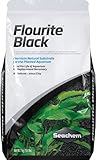 Seachem Flourite Black (7 kg / 15.4 lb) Seachem Flourite Black (7 kg / 15.4 lb)Model Flourite Black | low-tech tanks, CO2 tanks | A dark, permanent clay-gravel substrate for a planted tank. | You want a pH-lowering aquasoil or a lighter-colored substrate. |
- ADA Aqua Soil Amazonia Ver.2: choose it if you want a nutrient-rich soil with an included supplement and can wait out a substantial ammonia release; ADA's own log recorded high ammonium for weeks before it cleared.
- Tropica Aquarium Soil Powder: choose it for a nano tank or carpeting foreground, thanks to its 1-2 mm grain, if you can do the frequent water changes Tropica recommends for the first 4 weeks.
- Seachem Flourite Black: choose it if you want a permanent, dark clay gravel that does not alter pH, for hard-water livestock or a substrate that never needs replacing.
For more detail, see Seachem Flourite vs UNS Controsoil, our planted aquarium substrate buying guide, or the Substrates: what to check before you buy ↗ hub.
Verdict
UNS Controsoil is a strong fit for soft-water planted tanks and shrimp tanks where you want an aquasoil with a gentler startup than nutrient-rich soils, and you are happy to fertilize. It is the wrong choice for hard-water livestock or for a no-dosing tank that relies on substrate nutrients. Whatever its low-ammonia billing, cycle the tank and test before adding animals. Unsure which substrate type fits your plan? Try the setup finder.
Sources
- Ultum Nature Systems Controsoil product page, Ultum Nature Systems
- ADA AQUA SOIL series product page, ADA
- ADA Aqua Journal: Using Amazonia Ver.2, ADA
- Tropica Aquarium Soil Powder product page, Tropica
- Seachem Flourite Black product page, Seachem
This page is research-based: we have not tested the equipment or methods ourselves. It draws on the sources listed and established hobby practice.
Keep reading
Best Substrates for Planted Aquariums: Soils, Gravels, and Sands (2026)
Active aquasoils, porous clay and mineral gravels, and sands for planted tanks, compared by water chemistry, startup ammonia, and long-term upkeep.

How to Choose Aquarium Substrate for a Planted Tank
Aquasoil, inert gravel, or sand: how each affects plants, water chemistry, cycling, and livestock, plus depth, sloping, and how to estimate quantity.

Aquarium Cycling and Water Testing for Planted Tanks
How the nitrogen cycle works, how to cycle a tank without fish, how to tell when it is ready, and which water tests matter for planted tanks.