Best Plant Glue, Thread, and Planting Tweezers for Aquariums (2026)
Gel plant glues, a non-degrading plant thread, and straight and curved tweezers for attaching epiphytes and planting stems and crypts.

To fix anubias, Java fern, bucephalandra or moss to wood and rock, a gel plant glue is the quickest option. Seachem Flourish Glue is the one labeled for plants. Seachem Reef Glue is the same gel type in a larger 20 g tube, marketed mainly for corals, though Seachem says it works for freshwater aquascaping. hygger HC005 is a gel glue hygger says works dry or underwater. If you'd rather not use glue, UNS Foresta Line is a 480 m synthetic thread for tying plants on. For planting into substrate, UNS straight tweezers suit open areas and UNS curved tweezers reach behind hardscape. Seachem says not to use its glues on glass.
Who this guide is for
This guide is for anyone attaching plants to hardscape or planting into substrate: a new scape with anubias and ferns on driftwood, a moss wall on rock, or a carpet of small stem plants. Plants that grow from a rhizome, such as anubias and Java fern, shouldn't be buried. They go on wood or rock instead, held by glue, thread, or a tight crevice until their roots grip. Our guide to attaching anubias and Java fern covers the methods step by step. This page covers the supplies.
Before you buy, decide two things. Are you attaching plants to hardscape (glue or thread), planting into substrate (tweezers), or both? And will you be working in a dry tank before filling, or in a tank that already holds water and livestock?
Comparison table
| Product | Fits | Best for | Skip if |
|---|---|---|---|
 Seachem Flourish Glue (2 x 4 g) Seachem Flourish Glue (2 x 4 g)Model 67131160 | low-tech tanks, CO2 tanks | Attaching anubias, ferns, bucephalandra or moss to wood and rock. | You only plant stem plants and carpets into substrate. |
 Seachem Reef Glue (20 g) Seachem Reef Glue (20 g)Model 67131150 | low-tech tanks, CO2 tanks | Larger hardscape jobs where you will glue many plants or stones. | You want a product labeled specifically for plants; choose Flourish Glue. |
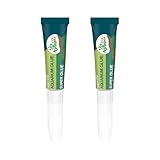 hygger HC005 Aquarium Glue (2-pack) hygger HC005 Aquarium Glue (2-pack)Model HC005 | low-tech tanks, CO2 tanks | Re-attaching a loose plant in a tank that is already filled. | You prefer a glue with a published size and chemistry; choose Seachem Flourish Glue. |
 Ultum Nature Systems Foresta Line Moss Thread (480 m) Ultum Nature Systems Foresta Line Moss Thread (480 m)Model Foresta Line | low-tech tanks, CO2 tanks | Tying moss, ferns and anubias to wood or rock when you prefer not to use glue. | You want a thread that breaks down once plants attach. |
 Ultum Nature Systems Aquascaping Tools Straight Pinsettes (Straight, black) Ultum Nature Systems Aquascaping Tools Straight Pinsettes (Straight, black)Model ST10B | low-tech tanks, CO2 tanks | General planting of stems and carpet plants in open areas. | You already own straight aquascaping tweezers. |
 Ultum Nature Systems Aquascaping Tools Curved Pinsettes (Curved, black) Ultum Nature Systems Aquascaping Tools Curved Pinsettes (Curved, black)Model CT10B | low-tech tanks, CO2 tanks | Planting crypts and filling gaps behind rock and wood. | Your tank has only open, easy-to-reach planting areas. |
Glue or thread for epiphytes?
Both work. The choice comes down to speed, what stays behind, and how you feel about adhesives in the tank.
| Feature | Gel glue | Thread |
|---|---|---|
| Speed | About 20 seconds of pressing per plant (Seachem) | Slower; each plant is tied |
| What remains | A small bead, which can turn white | The thread, until you cut it |
| Best on | Small plants, moss, tight spots on rock | Larger rhizomes, moss over wood |
| Watch for | Skin and eye contact; keep off glass | Tying too tight around the rhizome |
Glue is fastest when you have many small plants to place. Thread suits people who'd rather not use an adhesive, and it can be undone. Foresta Line doesn't break down, so plan to trim it away once the roots hold. You can also mix them, for example glue for small bucephalandra and moss tufts and thread for larger anubias rhizomes.
Plant glues

Seachem Flourish Glue (2 x 4 g)
- Best for
- Attaching anubias, ferns, bucephalandra or moss to wood and rock.
- Skip this if
- You only plant stem plants and carpets into substrate.
- Type
- Cyanoacrylate gel
- Contents
- 2 pack, 4 g each
- Bond time
- Bonds within seconds; press for 20 seconds
- Made and labeled by an aquarium brand for plants
- Gel stays where placed
- Two small tubes
- Not for gluing to glass
- Small 4 g tubes run out on big scapes
Flourish Glue is a cyanoacrylate gel that comes as two 4 g tubes. Seachem describes it as a glue for attaching moss and plants to rocks, driftwood, and even gravel, and says it can be used for any aquascaping in freshwater or saltwater aquariums. It bonds within seconds, and Seachem says it can be used underwater. Two limits matter. Seachem says not to use it to adhere items to glass, and the small tubes can run out on a large scape.

Seachem Reef Glue (20 g)
- Best for
- Larger hardscape jobs where you will glue many plants or stones.
- Skip this if
- You want a product labeled specifically for plants; choose Flourish Glue.
- Type
- Cyanoacrylate gel
- Size
- 20 g (0.7 oz)
- Bond time
- Bonds within seconds; press for 20 seconds
- Larger 20 g tube
- Same gel type as Flourish Glue
- Seachem states freshwater aquascaping use
- Labeled for corals, not plants
- Bonds skin and eyes in seconds (Seachem warning)
Reef Glue is also a Seachem cyanoacrylate gel, in a single 20 g (0.7 oz) tube. Seachem markets it mainly for mounting coral frags and its page doesn't mention plants by name. Seachem does state that Reef Glue can be used for any aquascaping in freshwater or saltwater aquariums. Its directions match Flourish Glue's: press for 20 seconds. The larger tube makes sense if you'll glue many plants or stones. If you'd rather use a product labeled for plants, choose Flourish Glue. Seachem's warning applies to both: it bonds skin and eyes in seconds.

hygger HC005 Aquarium Glue (2-pack)
- Best for
- Re-attaching a loose plant in a tank that is already filled.
- Skip this if
- You prefer a glue with a published size and chemistry; choose Seachem Flourish Glue.
- Type
- Gel adhesive (hygger does not name the chemistry)
- Set time
- Partial strength in 30 sec, fully cured in 5 min
- Use
- Works dry or underwater
- Maker states fish, shrimp and plant safety
- Can be applied underwater per hygger
- Fast cure per hygger
- Excess may leave white residue
- hygger does not publish tube size
hygger's HC005 is a gel adhesive sold as a 2-pack. hygger says it reaches partial strength in 30 seconds and fully cures in 5 minutes, and that it works dry or underwater. hygger describes it as safe for fish, shrimp, and aquatic plants in freshwater and saltwater tanks. Still, hygger advises letting the glue fully cure before adding livestock. It warns that excess glue may leave a white residue, so use it sparingly and apply it only to the contact points. Two gaps: hygger doesn't name the glue's chemistry, and doesn't state the tube weight.
How to apply gel glue
These steps follow Seachem's directions for Flourish Glue. Check the directions on any other product you use.
- Dispense a small amount of glue before each use, away from the plant.
- Apply a small amount of glue to the moss or the plant's roots.
- Press the plant against the rock, wood, or gravel for 20 seconds.
- Clean the tip before you put the cap back on.
- Don't use it on glass surfaces.
Our anubias and Java fern guide adds practical placement tips, such as gluing under the roots so the bead stays out of sight, and keeping glue off the rhizome itself.
Plant thread

Ultum Nature Systems Foresta Line Moss Thread (480 m)
- Best for
- Tying moss, ferns and anubias to wood or rock when you prefer not to use glue.
- Skip this if
- You want a thread that breaks down once plants attach.
- Material
- Synthetic thread
- Length
- 480 m
- Color
- Green
- Very long roll
- Green color blends with plants
- Does not rot away
- Does not dissolve; may need trimming later
- Tying takes longer than gluing
Foresta Line is a green synthetic thread on a 480 m roll. UNS describes it as perfect for attaching plants to hardscape material or other surfaces, and the green color is meant to blend with plants. UNS lists it with its Foresta paludarium range. UNS also says it will not degrade over time, which cuts both ways. The plant stays held for as long as you need, but the thread remains until you remove it. Once roots have gripped, snip it away so it doesn't cut into the rhizome as the plant grows. If you want a thread that breaks down on its own, this isn't it.
Planting tweezers
Tweezers do the substrate work: pushing stem cuttings and small carpet portions into soil, and setting crypts in among hardscape. Our essential aquascaping tools guide explains which tools to buy first.

Ultum Nature Systems Aquascaping Tools Straight Pinsettes (Straight, black)
- Best for
- General planting of stems and carpet plants in open areas.
- Skip this if
- You already own straight aquascaping tweezers.
- Material
- Stainless steel, rust resistant
- Tips
- Serrated
- Finish
- Satin (UNS offers two finishes)
- Serrated tips grip stems
- Rust-resistant stainless steel
- Length not published by UNS
- Straight tips are harder to use in tight spots
UNS describes its straight tweezers as a great choice for general planting. They're stainless steel and rust resistant, with serrated tips. UNS says the serration prevents uprooting plants when you pull the tweezers back up out of aquarium soil. UNS doesn't list the length on its page, which matters because tweezers need to reach the substrate at the back of the tank with your hand above the water. Measure your tank depth and check the listing before you buy. If you already own straight aquascaping tweezers, you don't need another pair.

Ultum Nature Systems Aquascaping Tools Curved Pinsettes (Curved, black)
- Best for
- Planting crypts and filling gaps behind rock and wood.
- Skip this if
- Your tank has only open, easy-to-reach planting areas.
- Material
- Stainless steel, rust resistant
- Tips
- Serrated
- Finish
- Satin (UNS offers two finishes)
- Curve reaches behind hardscape
- Serrated tips
- Length not published by UNS
UNS's curved tweezers have the same serrated tips and stainless steel. UNS says they aid in planting difficult-to-reach areas of a hardscape layout and are ideal for thicker plant species such as Cryptocoryne. As with the straight pair, UNS doesn't publish the length.
Straight or curved?
- Straight for open foreground and midground planting, rows of stem cuttings, and carpet plants. Our carpeting plants guide covers planting those in small portions.
- Curved for reaching behind rock and wood, filling gaps in a dense layout, and handling thicker plants like crypts.
- Both if your scape has a lot of hardscape and open planting areas.
If you'd like tweezers with a published length, or a kit that also includes scissors, see our aquascaping and maintenance tools picks. They include the 30 cm JBL ProScape P30 and the hygger HG030 kit.
Compatibility
- Surfaces: the Seachem glues are for rock, wood, and gravel, not glass. hygger lists moss, coral, stones, and wood.
- Water type: Seachem and hygger state freshwater and saltwater use for their glues.
- Tank style: none of these supplies depends on CO2 or lighting, so they suit low-tech and CO2 tanks alike.
- Working wet: Seachem says Flourish Glue can be used underwater, and hygger says HC005 works dry or underwater. In a filled tank, keep the amount small.
Alternatives and when to skip buying
If your scape is all stem plants and carpets planted into substrate, you don't need glue or thread at all. Tweezers are the only supply here you'd use. If you have only one or two anubias, a tight crevice in the hardscape holds a rhizome with nothing extra, as our anubias and Java fern guide explains. And if you already own aquascaping tweezers that reach the back of your tank, there's no need to add another pair. For a full planting plan, the aquarium plants topic groups our plant guides.
How we chose
We matched each product to its Amazon listing by brand, item number and pack size. Specifications and usage claims come from Seachem, hygger and Ultum Nature Systems product pages. Where a listing and a maker disagreed, or a maker didn't publish a figure, we used the maker's information or left the figure out, and we say so. We kept each maker's caveats in, such as Reef Glue's coral marketing and the glass warning. We only included products with strong buyer feedback when we checked. We haven't tested these products hands-on, and we don't rank or score them.
Related guidance
- How to attach anubias and Java fern
- Essential aquascaping tools
- Carpeting plants for planted tanks
- Aquascaping and maintenance tools, with planting tweezer lengths and a full tool kit
- Aquarium plants topics
Sources
- Flourish Glue, Seachem
- Reef Glue, Seachem
- HC005 Aquarium Glue, hygger
- Foresta Integrated Paludarium (Foresta Line), Ultum Nature Systems
- Stainless Steel Accessories, Ultum Nature Systems
This page is research-based: we have not tested the equipment or methods ourselves. It draws on the sources listed and established hobby practice.
Keep reading

How to Attach Anubias and Java Fern
Why rhizome plants should not be buried, how to tie, glue, or wedge them onto wood and rock, where to place them, and how to divide and propagate them.
Essential Aquascaping Tools and What to Buy First
Which aquascaping tools make planting and maintenance easier, what each one is for, how to care for them, and which to buy first versus later.
Carpeting Plants for Planted Tanks
Aquarium carpet plants by difficulty, including which ones carpet without CO2, with the light, substrate, and planting each needs and why carpets fail.